
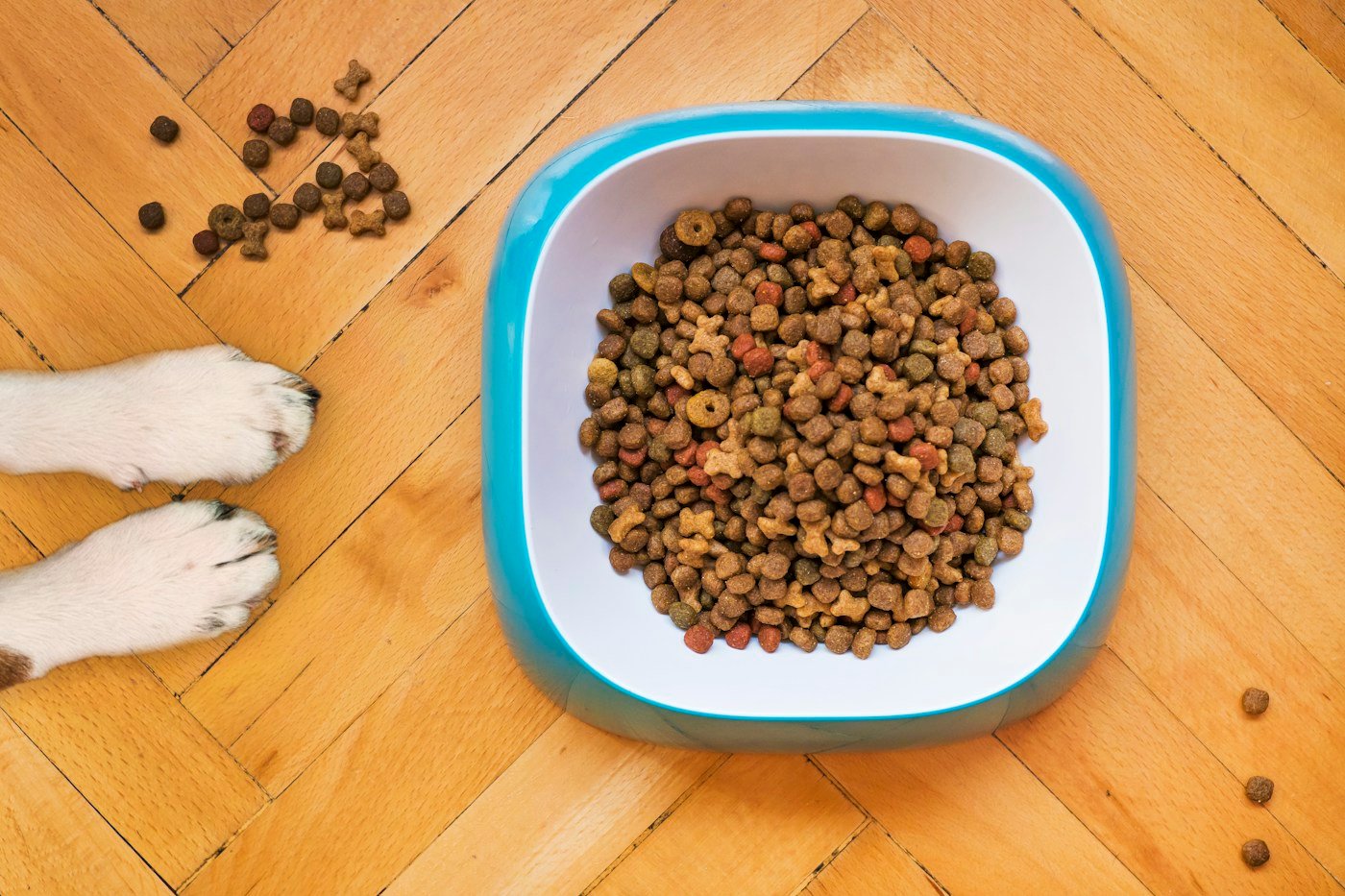
Look for a complete diet statement
Start by checking whether the food is described as complete and balanced for your pet’s species and life stage. Dogs and cats have different nutrient requirements, and a food designed for one species is not automatically appropriate for the other.
Match the food to life stage and needs
Puppies, kittens, adults and senior pets may have different requirements. Pets with allergies, urinary concerns, kidney disease or weight issues may need veterinary guidance before changing food.
Read the feeding directions as a starting point
Package feeding tables are estimates, not exact prescriptions. Use a measuring cup or kitchen scale and monitor body condition, appetite and energy. Ask your vet to help adjust portions if weight changes.

Ingredients need context
The ingredient list can tell you what is included, but it does not by itself establish the overall nutritional quality of a food. Consider the manufacturer’s quality controls, nutritional expertise and whether the diet suits your pet.
Change food gradually
When a change is appropriate, transition over several days or as advised by your veterinarian. Watch for persistent vomiting, diarrhoea, itching or appetite changes and seek advice if they occur.
Final thoughts
Choose food based on nutritional adequacy, your pet’s needs and reliable manufacturer information rather than marketing claims alone. Your veterinary team can help compare options.
