Choose tools for your dog’s coat
Short, double and long coats have different needs. A soft brush or grooming mitt may suit some short-haired dogs, while longer coats may need a comb that gently separates tangles. Introduce tools slowly and reward calm behaviour.
Brush little and often
Regular brushing removes loose hair and gives you a chance to notice mats, skin irritation, ticks or unusual lumps. Work gently in small sections and never yank at a tangle. If a mat is tight against the skin, ask a professional groomer or veterinarian to remove it safely.
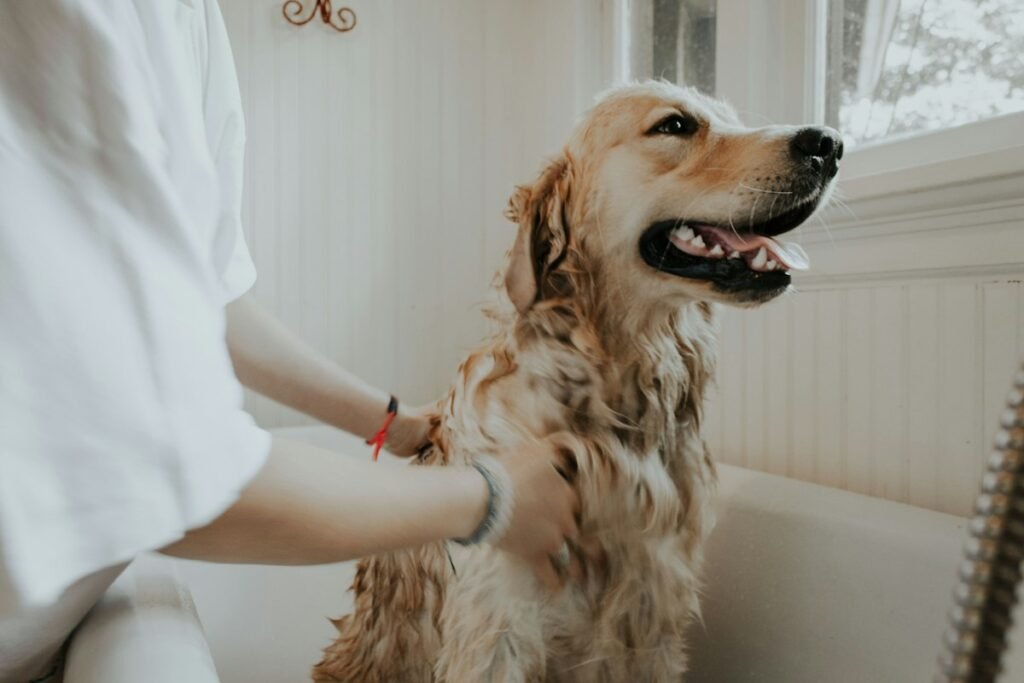
Bathe only when needed
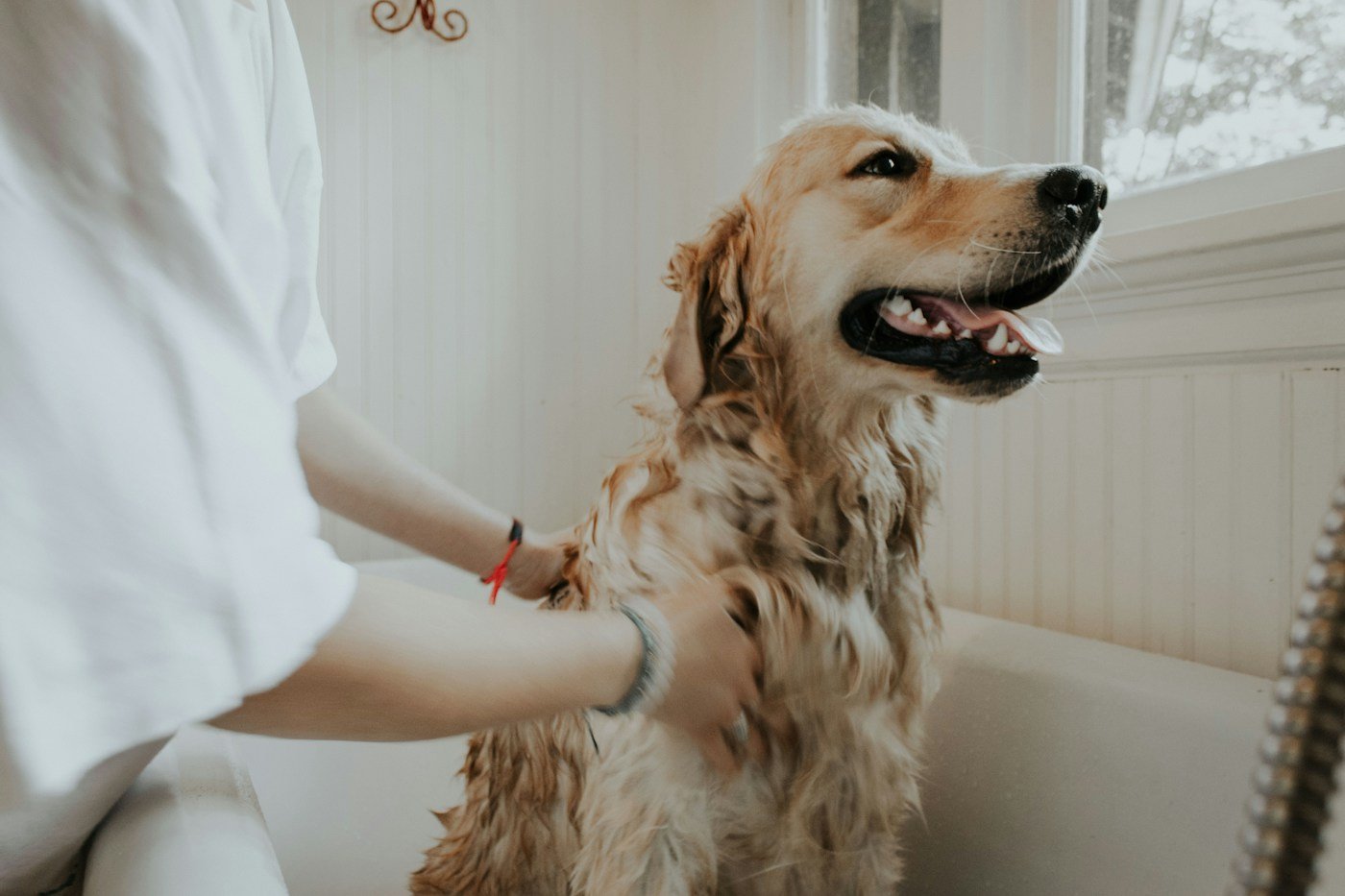
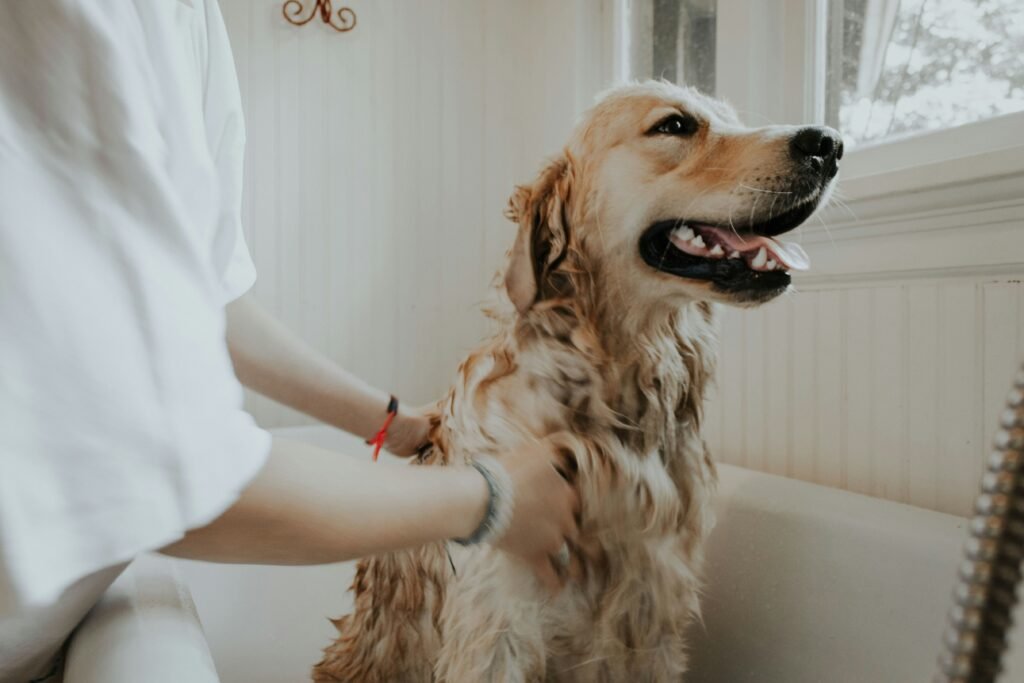
Use lukewarm water and a shampoo made for dogs. Keep water and shampoo away from the eyes and inside the ears, rinse thoroughly and dry your dog comfortably. Over-bathing can dry some coats and skin, so ask your vet if your dog has recurring skin issues.
Check paws, ears and nails
Look between the toes for debris and check nails regularly. Nails that click heavily on hard floors may need attention, but trimming too short can cause pain and bleeding. If you are unsure, ask a veterinary professional to demonstrate.
Make grooming a positive habit
Choose a quiet time, use treats and stop before your dog becomes distressed. Several short sessions are often easier than one long session. Never use human grooming products unless your veterinarian specifically recommends them.
Final thoughts
A routine tailored to your dog’s coat and comfort helps keep grooming manageable. Sudden itching, bald patches, odour or skin changes deserve veterinary advice.